Reviewed · KOTOR TOURS & EXPERIENCES
Kotor Personal Digital Cultural Guide
Kotor can be mapped like a living story. This self-guided experience gives you a 50+ page e-guide made with local input, plus an on-the-go map so you can move through the Old Town and viewpoints at your pace. I especially like the clear structure, from Sea Gate and Armoury Square landmarks to quiet side stops and big fort views. One thing to consider, it is not designed for visually impaired travelers, and the map may require internet.
You get lifetime access to the Golden Fleece digital guide, including maps, suggested food and nightlife ideas, transport tips, emergency numbers, and even a local music playlist for the walk back to your apartment. It is priced low for a private group, so it can feel like getting local guidance without paying for an in-person guide for every hour.
In This Review
- Key highlights
- How the Golden Fleece digital guide helps you enjoy Kotor
- Price and value: $13.85 per group for a 3-day plan
- Sea Gate to Armoury Square: your Day 1 opening act
- St. Tryphon Cathedral and the square of power
- Church hopping that actually feels logical: St. Mary Collegiate and St. Luke
- The Cats Museum stop: a smart break from the big monuments
- San Giovanni Fortress: the best late-day payoff
- Day 2 in Boka Bay: Dobrota’s sea promenades and palace names
- Prčanj: quiet promenade time on the other side of the bay
- Fort Vrmac and Fort Gorazda: Austro-Hungarian forts without the crowds
- Fort Vrmac, built to last
- Fort Gorazda, famous turret engineering
- Kotor Serpentine and cable car: top-down views plus a cafe reset
- What the guide includes that you will actually use on the ground
- Practical tips before you start: how to make the most of self-guided
- Who should book this Kotor digital guide?
- Should you book this Kotor Personal Digital Cultural Guide?
- FAQ
- How much does the Kotor Personal Digital Cultural Guide cost?
- How long is the experience?
- Is there an in-person guide?
- Where do I start and end?
- Do I need internet?
- Are any attraction entry fees included?
- What is the cancellation policy?
Key highlights
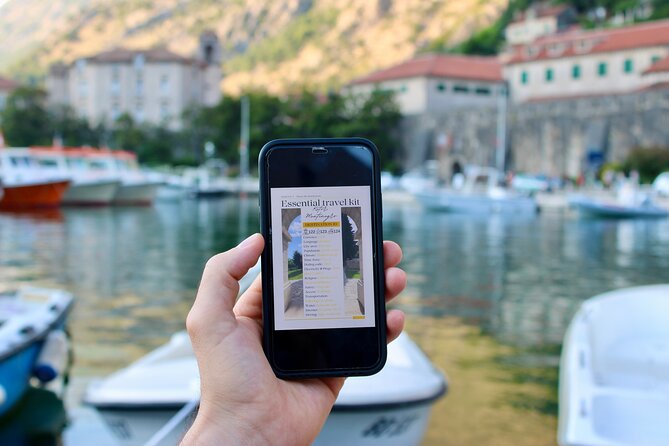
- 50+ page e-guide you keep forever, written by locals and cultural tourism professionals
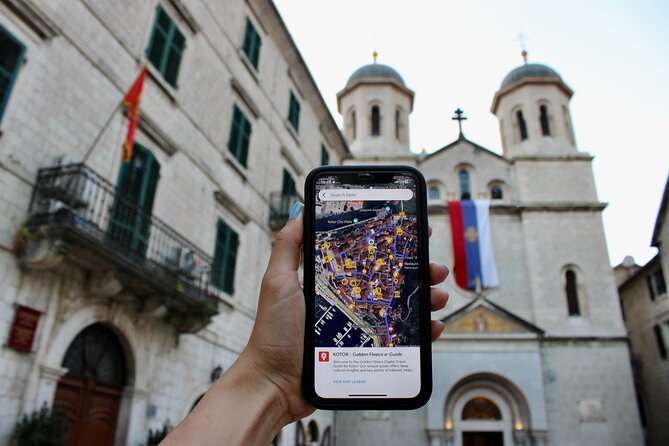
- On-the-go map with instructions, built for city navigation while you’re walking
- Day-by-day route logic, from Old Town sights to forts above the bay
- Practical planning help, like transport tips, food ideas, and nightlife suggestions
- Optional entry guidance, so you can choose what to pay for and what to skip
- Private group format, up to 4 people, with a mobile ticket for easy use
How the Golden Fleece digital guide helps you enjoy Kotor
This is not a live walking tour. It is you, your phone, and a thoughtfully planned guide that tries to solve the real problem in Kotor: where to go next, without wasting time guessing.
The guide is built around a 3-day flow that makes sense geographically. Day 1 stays in the Old Town core, where you can wander between squares and churches without backtracking too much. Day 2 shifts to the waterfront neighborhoods across the bay, where the pace feels more relaxed. Day 3 pushes up into the hills with Austro-Hungarian forts and viewpoint options, so you get the “wow” factor that Kotor is famous for.
The “local friend” feeling comes from how the guide mixes history with practical context. You are not just reading dates, you’re getting the why behind the places. For example, the Old Town stops point you to specific landmarks and towers, then you get hints on what to notice as you walk.
Still more Kotor and Bay of Kotor trips:
Price and value: $13.85 per group for a 3-day plan
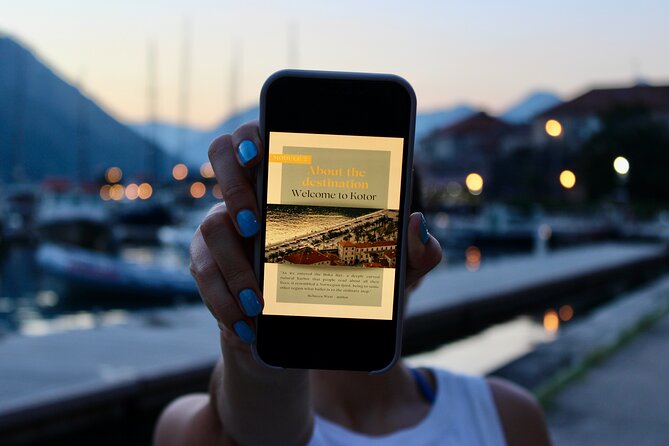
At $13.85 per group (up to 4), this works out to a small cost per person. For that, you are not buying a museum ticket or a single attraction. You’re buying a plan plus a tool.
That tool matters because Kotor can eat hours fast. If you are paying for one or two paid guides, the cost can climb quickly. Here, the real value is that you have a structured route for multiple days, plus lifetime access. That means you can read it before you go, use it in real time, and keep it for future reference or a return trip.
Also, you are not paying for entry fees that you do not need. The guide flags optional paid stops like museums (less than 15 EUR total) and the Kotor Fortress (12 EUR). So you can control your budget rather than getting locked into one fixed ticket plan.
Sea Gate to Armoury Square: your Day 1 opening act
Starting at Sea Gate, you step into Kotor’s Old Town like you’re entering a set. It is one of those moments where the architecture tells you this place has been watched and defended for centuries.
Your first stop is Armoury Square, the biggest square in town. The guide nudges you to look for several key landmarks clustered around the space:
- Providur’s Palace
- City Watch Tower
- Old Clock Tower
- Pillar of Shame
- Napoleon’s Theatre
Here is what I like about this approach. You get multiple “anchors” in one place, so you feel oriented. Even if you later get turned around in the maze of lanes, your brain has reference points: tower, clock, palace, and that unusual old story marker, the Pillar of Shame.
Timing wise, you’re looking at about 30 minutes at this start point, and that is about right. You want a quick scan, then you want to keep moving.
St. Tryphon Cathedral and the square of power
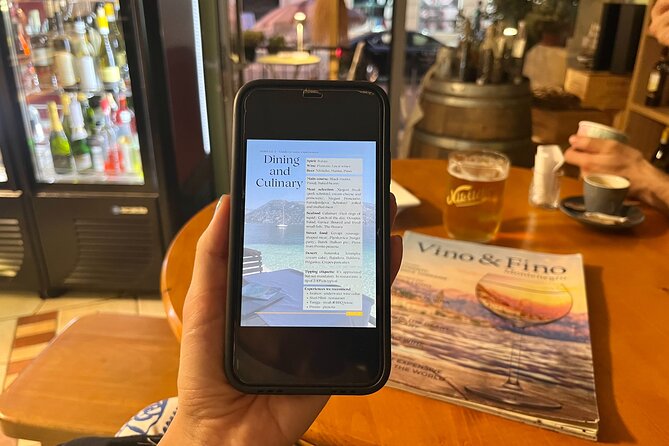
Next up is St. Tryphon Cathedral, in the central cathedral square. The stop is around 45 minutes, and it focuses you on what matters in the square itself: not only the cathedral, but also the surrounding civic and cultural buildings.
You’ll notice the Municipality Building, the Historical Archive, and the Regional Institute for Conservation of Cultural Monuments Kotor. The guide also points out Drago Palace and nearby restaurant options so you can pause without spiraling into decision fatigue.
A small practical tip: plan your cathedral time so you’re not hungry right after. It is easy to spend longer inside than you think, especially if the church details catch your eye. The guide’s stop structure helps you avoid the classic mistake of doing a major sight right before you’re looking for food.
Church hopping that actually feels logical: St. Mary Collegiate and St. Luke
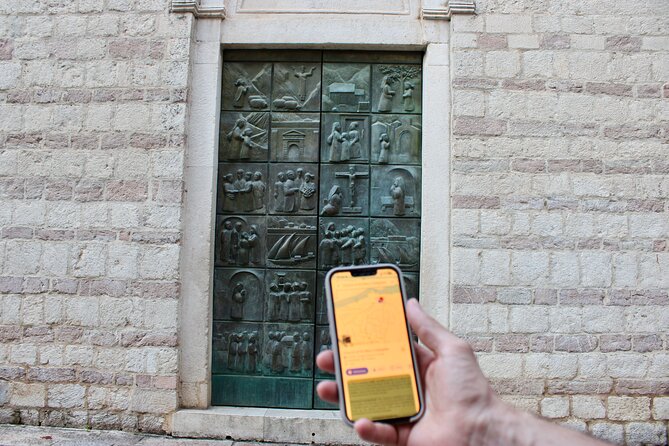
Day 1 keeps rolling through churches that tell different parts of Kotor’s religious and architectural story.
- Church of St. Mary Collegiate: about 30 minutes. The guide highlights that it was built in the 12th century on the remains of a 6th-century basilica. That “layering” is the key takeaway. You’re not only seeing a church, you’re seeing how Kotor reused sacred ground across time.
- Church of St. Luke: also around 30 minutes. The square is called St Luke’s Square, formerly Piazza Greca, and it connects to the Orthodox community because there were two Orthodox churches here. The result is a stop that helps you understand why Kotor’s old town doesn’t feel one-note.
Both of these are listed as free admission, which is great. These are the kinds of stops where you can take your time without feeling like you’re burning money.
Still more Kotor trips to browse
- Tivat/Kotor: Boka Bay Full-Day Guided Cruise with Swim Stop★ 4.3 · 730 reviews
- Kotor Cable Car – Perast – Lady of the Rocks Guided Tour★ 4.9 · 97 reviews
- Blue Cave Guided Tour in Kotor Bay★ 5.0 · 91 reviews
The Cats Museum stop: a smart break from the big monuments
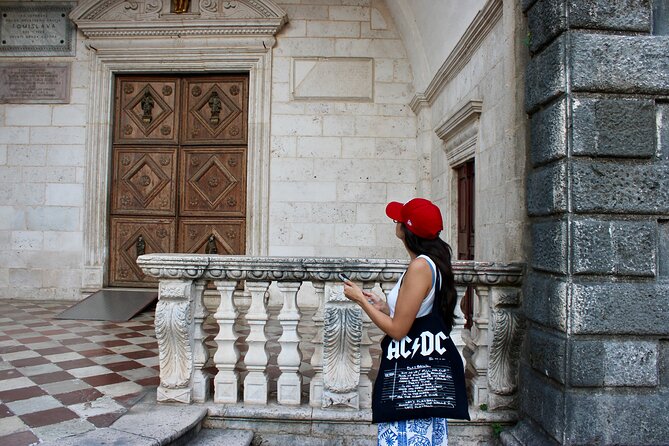
After churches and squares, the guide gives you Cats Museum time in a shaded, pleasant pocket near Piazza of the Cinema.
This stop is about 30 minutes, with plenty of “pause” space because you’re in a small elevated square with a large tree and cafe options. The guide also pairs the area with:
- Church of St. Michael
- Cinema Boka
- The Cats Museum
I like including a playful stop like this on the first day. Kotor’s Old Town can run a bit intense, because the walls, towers, and cathedrals demand attention. A quirky museum break lets your feet rest and your brain reset, so your fortress climb later feels better instead of rushed.
San Giovanni Fortress: the best late-day payoff
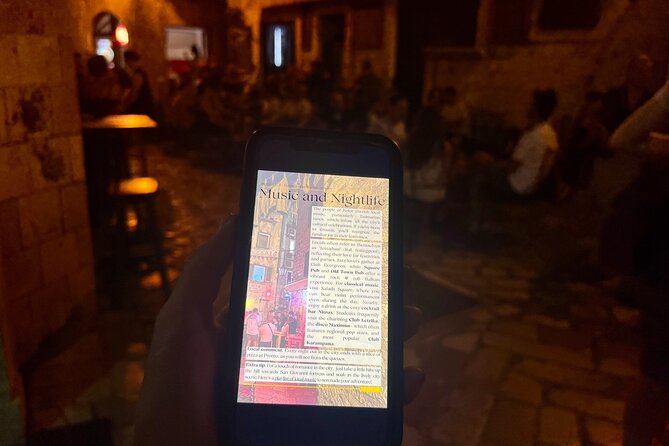
After you’ve done the Old Town circuit, the guide recommends heading to Castle of San Giovanni (San Giovanni Fortress) in the early evening. That timing matters. The hilltop air and the light change can make a big difference for views and for how the climb feels.
What the guide gives you is real scale. San Giovanni Fortress was developed over a long stretch of time, from the 9th century to the 19th century. The walls can reach up to 20 meters, and the fortifications stretch about 4.5 kilometers. This is also a major reason Kotor is a UNESCO World Heritage site.
Plan for about 2 hours. And since the entrance ticket is optional (12 EUR for the Kotor Fortress is listed), you can decide based on your energy level and whether you’re chasing the full fortress experience.
Day 2 in Boka Bay: Dobrota’s sea promenades and palace names
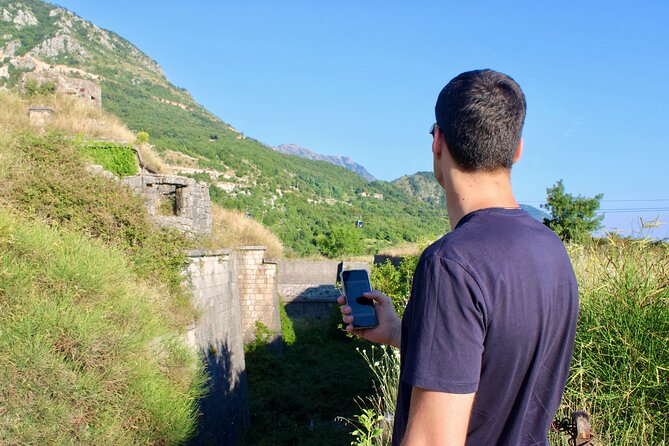
Day 2 shifts from the dense Old Town to the waterfront neighborhoods around the bay. The guide starts with Dobrota, stretching along the sea for about 8 kilometers.
The big value here is atmosphere. Dobrota has a long promenade with stone piers, old palaces, churches, and seafood-friendly restaurant options. If you want a less crowded feeling than the Old Town, this is where you go.
The stop is about 3 hours, and the guide lists specific places you can aim for, including:
- Palace Radoničić (Institute of marine biology)
- Church of St Elijah
- Palace Milošević
- Church of St Matthias
- Rooster’s tower palace
- Palace Tripković
- Church of St Eustachius
- Palace Ivanović
A practical way to enjoy this day is to use the palace and church names as wayfinding points. Even if you stop for lunch or drift off for photos, those anchors keep you moving in a rough line along the coast.
All of these are listed as free admission for your visits in Dobrota, which makes it easy to slow down.
Prčanj: quiet promenade time on the other side of the bay
From Dobrota you cross the bay to Prčanj, a village of just over 1,000 inhabitants that the guide describes as the least busy spot in Kotor.
Prčanj is tied to a practical reason too, the Institute for Respiratory Treatment, helped by the local natural conditions. But the guide also frames it as a place for art, culture, and slower wandering.
This stop is about 3 hours, and it is packed with named stops:
- Palace Tre sorelle
- Palace Luković
- Old parish church
- Church of St Peter of Montenegro
- Church of St Nicholas
- Our Lady’s temple
- Njegoš’s villa
- Church of St John the Baptist
- Palace Verona
- Palace Florio-Luković
One of the best parts about Prčanj is that you get views and quiet without needing a paid ticket. The guide also suggests the kind of Mediterranean cafes and restaurants that fit the mood, so you can build your own half-hour pauses without derailing the day.
Fort Vrmac and Fort Gorazda: Austro-Hungarian forts without the crowds
Day 3 is where Kotor turns into big views and military history. The guide takes you above the bay into two forts and then tops it off with road and cable car viewpoints.
Fort Vrmac, built to last
Fort Vrmac is an Austro-Hungarian fortification near Tivat, on the Vrmac ridge. The guide notes it was established in 1860, and the current structure was built between 1894 and 1897. What you’re aiming for is the fact that it is one of the best-preserved fortifications in the Bay of Kotor region.
Plan around 2 hours, with the focus on the setting and the scale.
Fort Gorazda, famous turret engineering
Next is Fort Gorazda, built between 1884 and 1886. The standout detail here is the 100-ton Gruson rotating turret, described as the last of its kind. The guide also says the fort fought in World War I artillery duels with Montenegrin batteries on Mount Lovćen, and it remained intact after an Austrian offensive in 1916.
It also gives you a more recent timeline, used as a Yugoslav Army depot until the early 1990s, now abandoned but open for visits.
Plan about 2 hours for this one too. Since both forts are listed as free, it’s a good day to prioritize walking time and viewpoints over ticket spending.
Kotor Serpentine and cable car: top-down views plus a cafe reset
After forts, the guide shifts to the “views on demand” options: Kotor Serpentine and the Kotor cable car.
The Kotor Serpentine is a road with 25 sharp bends that climbs up to about 900 meters above sea level. The guide also names a place to reward your climb with a break, Bar Horizont, described as a must-visit.
Then it adds a second option: the newly opened Kotor cable car that ascends to 1316 meters. At the top, you can enjoy a cafe with a selection of cakes and rent a bike.
The guide suggests setting aside about 3 hours for this final leg. I’d treat it as flexible time. If you’re into photos, it expands. If you just want a quick view and coffee, it contracts.
What the guide includes that you will actually use on the ground
This guide is not only about routes. It also aims to cut down planning stress while you’re walking.
You get:
- A mobile ticket
- A stylish PDF guide with clickable links
- An on-the-go map and instructions
- Local historical, cultural, and architectural insights
- Practical tips on transport, local food, attraction entries, and nightlife
- Emergency numbers
- A music playlist
- Local secrets and suggested alternative locations
- Lifetime access
For a city like Kotor, I think the “practical” part is where most value hides. When you know which streets connect, which squares to target, and when to shift neighborhoods, you stop spending time on your phone and start spending time outside.
Practical tips before you start: how to make the most of self-guided
Because this is a self-guided setup, your success depends on how you use it.
A few habits help:
- Download and open the PDF and map instructions before you start moving, so you are not fighting your signal in the Old Town lanes.
- Treat the stop times as a minimum. If a church has details that catch your eye, you’ll naturally run long. That is fine as long as you keep one anchor per day for direction.
- Decide early whether you want paid entries like the Kotor Fortress (12 EUR). If your feet feel good, go for it. If not, you can still enjoy the town without adding extra costs.
- Wear shoes that can handle uneven Old Town ground. The route is built for walking, and the day 3 forts add more ground than you might expect.
And since you’re using a private group format, up to 4 people can share the experience. That can be a big plus if you’re traveling with friends or family who do not all want the same pace.
Who should book this Kotor digital guide?
This is a strong fit if you want:
- A self-paced way to see the Old Town and the viewpoints above it
- A plan that includes real specifics like Providur’s Palace, the Pillar of Shame, Drago Palace, and the churches of St. Tryphon, St. Mary Collegiate, and St. Luke
- A budget-friendly alternative to an in-person guide, especially when you’re splitting the cost across a group
It is less ideal if:
- You need an experience adapted for visually impaired travelers (it is listed as not adapted)
- You do not want to rely on internet for the on-the-go map
Also, if you like learning while you walk and you tend to re-read trip notes after you return, the guide format should work well. One of the best notes tied to this guide is how it explains culture and history in a fun, easy way, so it doesn’t feel like homework.
Should you book this Kotor Personal Digital Cultural Guide?
If you’re planning 2 to 4 days in Kotor and you want structure without a live guide, this is a smart buy. The price per group is low, the guide gives you a clear multi-day route, and it includes practical city navigation support plus optional entry guidance.
Book it if you value self-guided freedom, you like having your plan in your pocket, and you want both Old Town culture stops and hilltop viewpoints. Skip it if you want a hands-on in-person tour or if you are counting on offline navigation and accessibility support.
In short, this works best as your do-the-walking, see-the-sights, learn-the-context companion, not as a substitute for guided accessibility needs.
FAQ
How much does the Kotor Personal Digital Cultural Guide cost?
It costs $13.85 per group, up to 4 people.
How long is the experience?
It is listed as 3 days (approx.).
Is there an in-person guide?
No. This is a private tour/activity with a digital guide and mobile ticket, not an in-person guide.
Where do I start and end?
You start at Sea Gate (CQF9+VVQ, Kotor, Montenegro) and the activity ends back at the meeting point.
Do I need internet?
Internet is only necessary for the On-the-Go map.
Are any attraction entry fees included?
City museum entry fees are not included, and they are listed as less than 15 EUR total. Entrance fee for Kotor Fortress is also not included and is listed as 12 EUR, optional.
What is the cancellation policy?
You can cancel for free. You must cancel at least 24 hours in advance for a full refund.
Newly added around Kotor
- Premium Boat Experience: Boka Bay w/ Our Lady of The Rocks & Blue Cave
★ 5.0 · 1 review - “Private Transfers & Day Tours in Montenegro
★ 5.0 · 1 review - Kotor: Blue Cave & Swimmimg, Our Lady of The Rocks, Mamula
★ 5.0 · 1 review - Explore Adriatic Coast of Montenegro – Private Budva & Tivat Tour
★ 5.0 · 1 review - Hiking Vrmac peninsula with panoramic view on Kotor bay
★ 5.0 · 1 review - Private Lovćen and Kotor Tour via Cable Car Montenegro
★ 3.0 · 1 review - Blue Cave Lady of the Rocks and Mamula Kotor Speed Boat Tour
★ 4.0 · 1 review
Kotor Tours & Experiences, compared.

Swim in the Blue Cave + Lady of the Rocks Tour
Read our review →
Blue Cave, Submarine Base and Lady of the Rocks Tour
Read our review →
Blue Cave Swim Stop, Lady of the Rocks & Submarine Base
Read our review →
From Dubrovnik: Montenegro Day Trip with Boat Cruise
Read our review →
From Kotor: Boat to Blue Cave & Lady of the Rocks &Submarine Base
Read our review →
Fast-Track Venetian Perast & Our Lady Of The Rocks
Read our review →
Blue Cave & Our Lady of The Rocks & Submarine Base
Read our review →